My Long COVID Journey: Two Friends, One Promise
After losing my friend Jana Johnson, I want to help people living with Long COVID tell the whole story of what happens and what recovery takes.
By Dawn C. Simmons
My Long COVID journey is also a story about my friend Jana Johnson. Through years of illness and uncertainty, we shared a determination to keep living, learning and helping others. I survived pneumonia. Jana died from it. I still get to decide what to do with the time I have.
When your medical story is complex, life is on the line and every specialist sees a different piece of your medical story, who puts the pieces together?
See the life behind the record
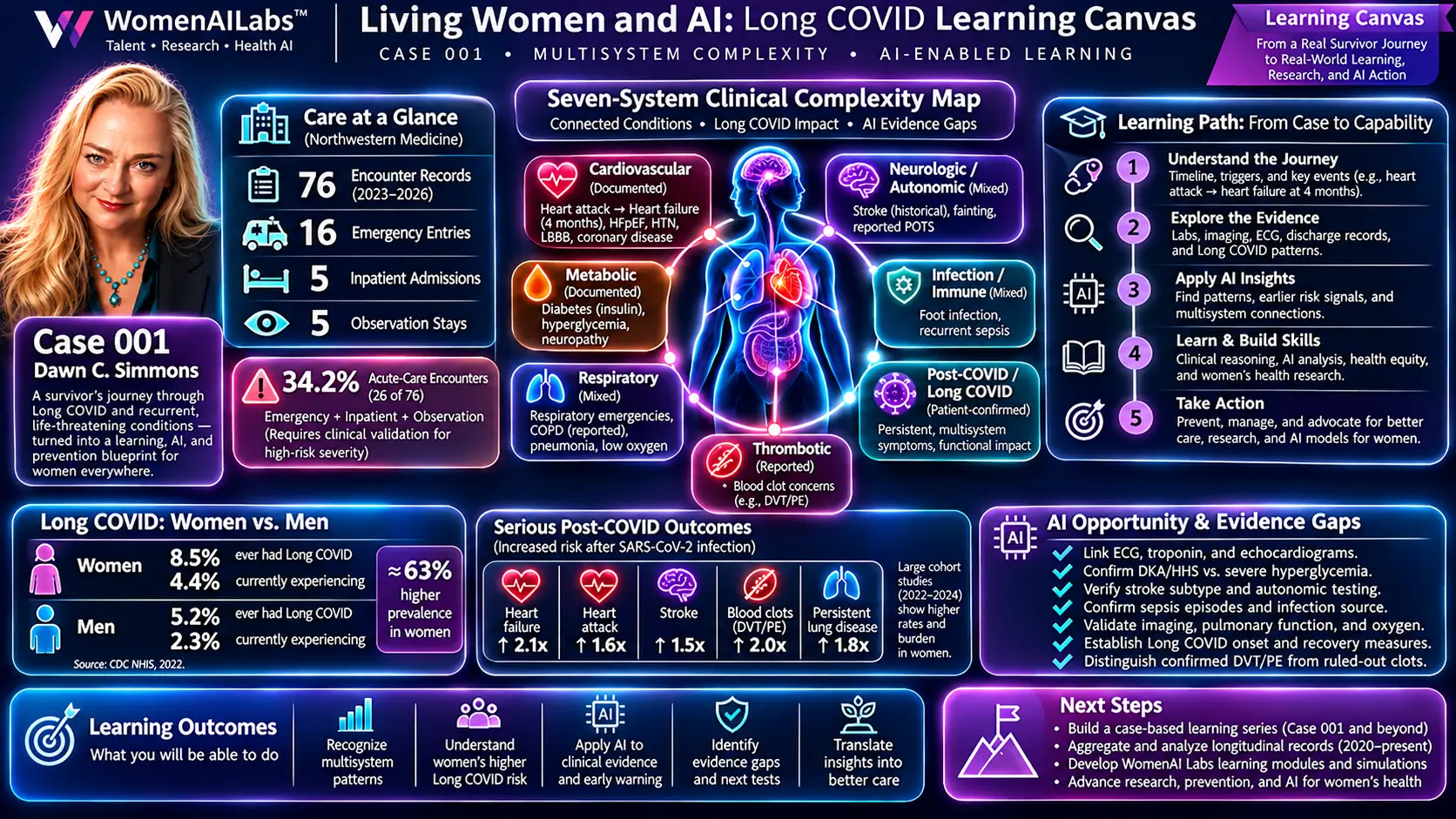
My health history is scary, but I am proud to be surrounded by support and inspiration. Great work, great people, and so much to live for. My history includes a stroke, five episodes of sepsis, sudden-onset diabetes, arrhythmia, a hypertensive crisis and a heart attack. I also survived heart failure. Each illness changed how I planned my days.
Emergency Medicine and health and wellness changed with Long-Covid. I kept making room for the work I do and the people I work with, the things I wanted to learn and the big problems I love helping people solve.
That list tells a list of accomplishments aimed at not dying, while learning to recover. Establishing whether and how those events were related takes clinical review. The CDC describes Long COVID as a chronic condition that can last for months or years and may require comprehensive care. For me, one place to start is with a timeline that makes it easier to ask what changed and when and a call to action for the health care community and survivors to conduct better studies using AI, to understand what is recovery from Long COVID, and how more can declare recovery. CDC Long COVID Basics
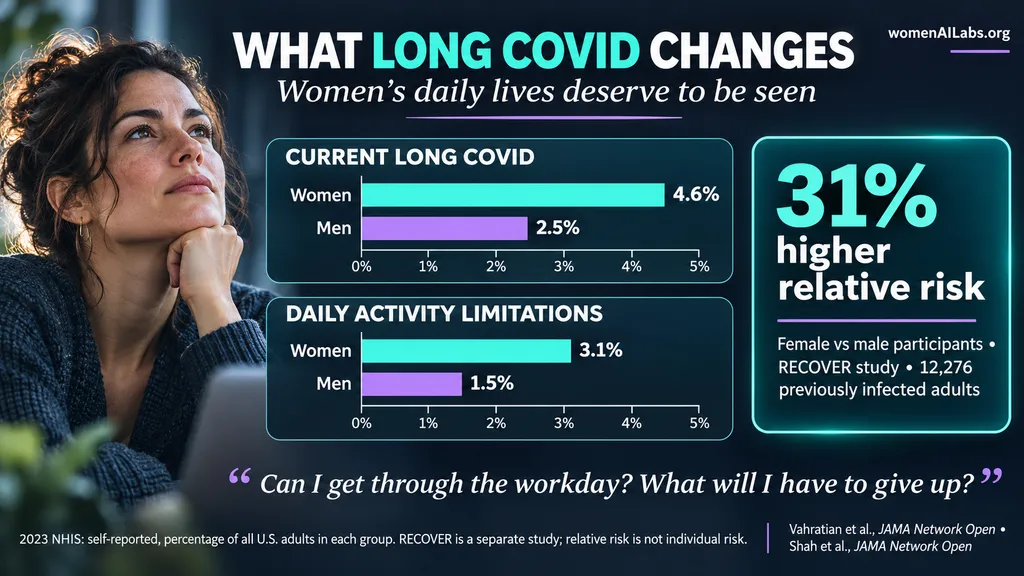
Measure what Long COVID changes for women
Test whether AI can help patients prepare for care
For the Living Survivors Initiative, I want to explore a practical use for AI. Could it put records in order, flag possible duplicates and help patients prepare questions for their next appointment? Each proposed timeline entry should point back to a source, and the patient should be able to correct it. A clinician should review medical interpretations. WHO’s guidance on AI in health emphasizes safety, documentation and data quality. World Health Organization
I’d start with a small, consent-based pilot. Before anyone shares records, I’d ask patients which question they most want their care team to answer. Then we could compare an AI-assisted timeline with a manually prepared one and see whether it helps them bring a clearer question to the appointment. We should count errors and unsupported connections alongside any improvement.
My Health encounter records to triage severity
My working summary lists 76 encounter records. It classifies 16 as emergency, five as inpatient and five as observation. Together, life threatening events account for 26 of 76 records, or 34.2%
Emergency Medicine is designed to save lives. Long-Covid needs more study to create strategies for recovery. A 2025 review of 14 studies involving 168,679 people found that female participants had 52% higher odds of Long COVID than male participants. And in a study of 2,329 patients at Northwestern Medicine’s Neuro COVID-19 Clinic, about two-thirds were women. Women in that clinic more often reported dizziness, fatigue, shortness of breath and chest pain. Those symptoms can touch several parts of a person’s life and bring them to several different specialists. PubMed
Long Covid for me, starts at my heart
For me, heart means two things: caring for my health and staying connected to the people and purpose I love.
My journey has included hypertensive crises, arrhythmia, a heart attack and heart failure. Fear and uncertainty can feel overwhelming, so I focus on what I can do: learn, ask questions and work with my care team toward recovery.
As someone who loves solving problems, I approach my health much like service management: gather the evidence, recognize patterns and decide what needs attention. AI helps me organize questions, but my clinicians help me interpret the answers.
A Stockholm study found an association between recorded Long COVID and newly recorded arrhythmia in women. It does not establish what caused my heart problems. That takes a careful review of my own history.
My heart is part of my medical story. It is also at the center of how I want to live.
When life is on the line and every specialist sees a different piece of my medical story, who puts the pieces together?
Mindfulness and Commitment
The numbers on daily activity make me think about the decisions my chart rarely captures. I live with an illness that has given me no clear timeline for recovery. That uncertainty can be hard for other people to sit with. I have to plan around it every day.
Staying employed, doing work I’m proud of and having access to ongoing care allow me to keep doing so much of what I love. Some mornings, though, the first question I ask is how much I can take on today. What can I commit to? What can I move? How much room do I need to leave for a body that can change the plan?
I manage my Long Covid “Hospital Go Bag” equipped with a hospital care kit and mobile office, extension cord, Laptop adapter, phone charger, Plaud AI. I want people to see my capabilities more than my limitations, so I have learned to work around “how I feel”.
There is so much I am proud of having done, and so much I want to do. But living with heart failure, is its own pacemaker of sorts. Sometimes, I just have to refocus to move forward. Beyond chest pain and episodes of nearly passing out brings a different set of questions. What changes should I report to my care team? I built my own “Dawn Agentic Common-Sense AI” to argue with on when I should go to the hospital with a log, if I need 911. I want a plan I can talk through with my clinicians on a good day, when there’s time to tell them which hospital I prefer and why. In an emergency, I want to be able to focus on getting help.
Those are questions about recovery, too. I want enough support to keep doing work I love, and a clear plan for the days when my health has to come first.
Carry Jana’s example forward
Remembering Jana Johnson: A Woman Who Made Things Better
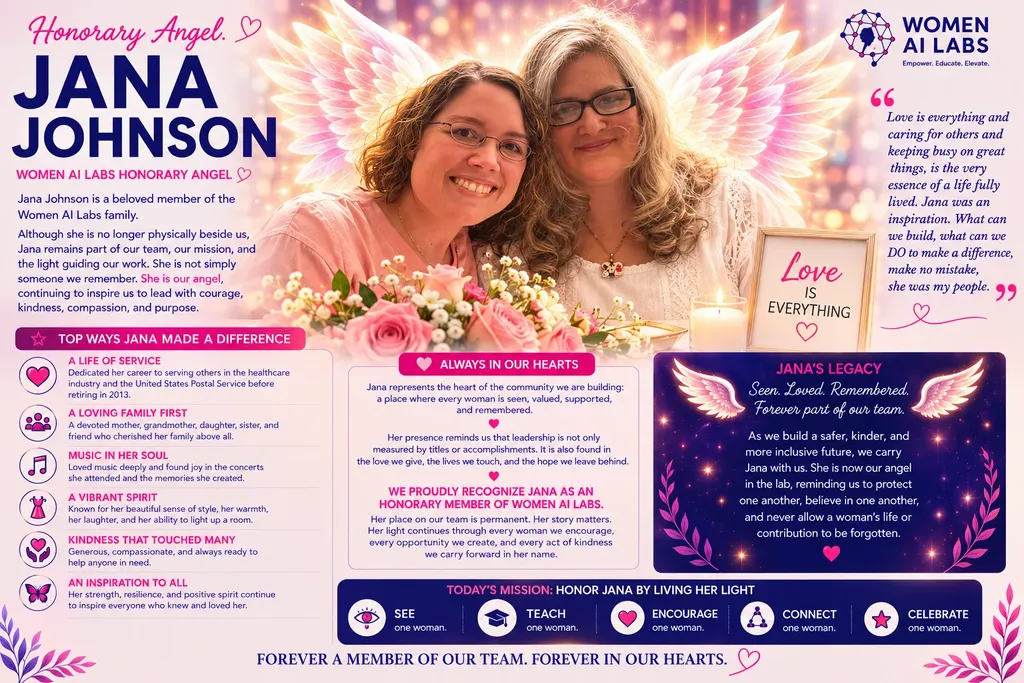
Who was Jana Johnson?
Jana Johnson built what she wished existed. As editor-in-chief of Customer Service Management at Ziff Davis and a champion in the HDI community, she gave customer service professionals a place to share what worked. As an entrepreneur, she designed and sold handbags for more than 30 years. When she needed better options for living with lipedema, she designed a machine she hoped would help her and other women.
Jana brought that same instinct to her advocacy. She raised funds for a CNN documentary on human trafficking and supported girls’ freedom and education. I knew her as my friend and Long COVID sister. See a problem, fix it!
What I carry forward is the question she answered with her work: What can we build that would make someone’s life better?
Her example lives on in the people she inspired and the work we continue together.
If you want to help shape this work, start by sharing one question you wish a care team had asked you, without sharing your medical records. These questions could help us design a better first conversation.
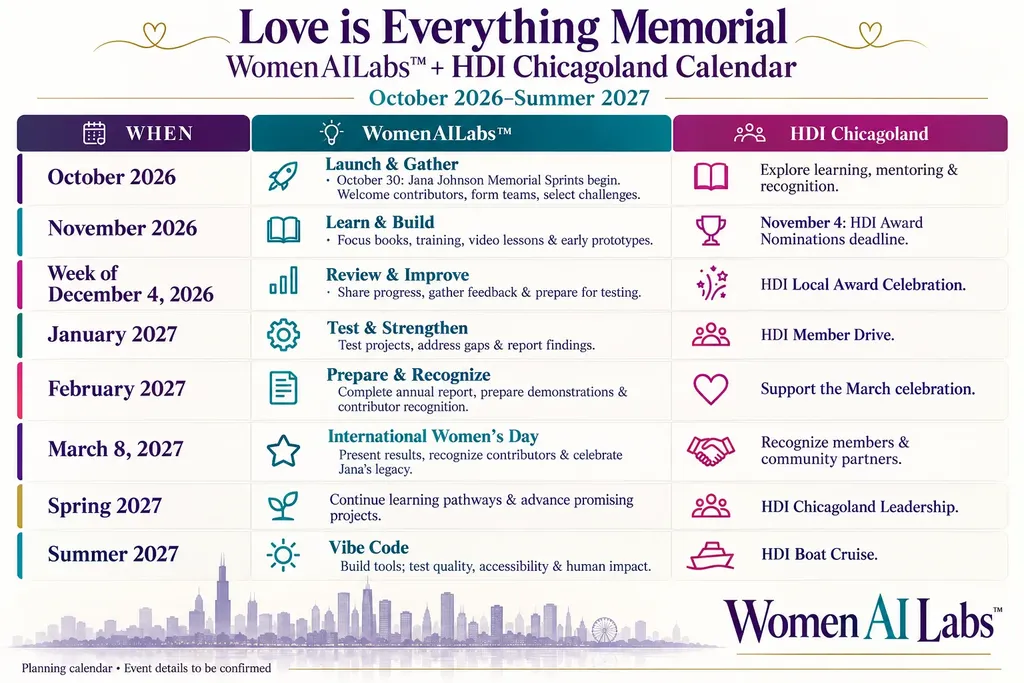
Love Is Everything Memorial · Get Involved
Count survival. Ask what it takes to live well.
Jana gave me friendship, courage, and a lasting reason to keep opening doors. Through the Love is Everything Memorial, we will carry her generosity into learning, opportunity, and practical work that helps others move forward.
- AI Equity Challenge — Women AI Labs
- HDI
- HDI Local Chapters
- ISIBINDI, creating circles of care for orphans and vulnerable children in South Africa
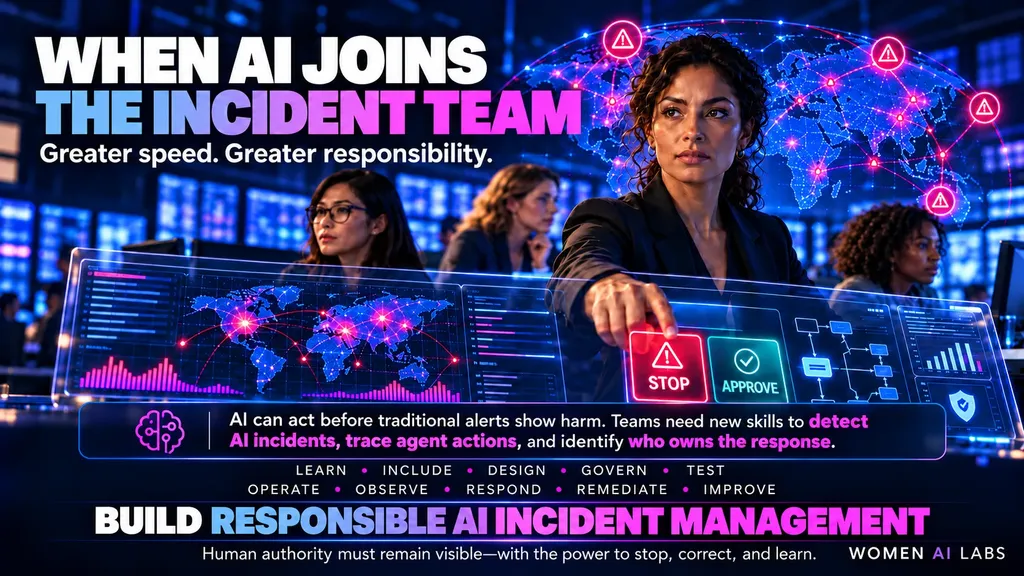
- Why AI agents need to be held to a code of conduct
- Women of AI Innovation LinkedIn
How can you participate?
Bring one skill and help a team create something useful. What do you want to learn. Take what you want to learn or grow or gain experience in. Lead what you can help others learn or grow or gain experience in.
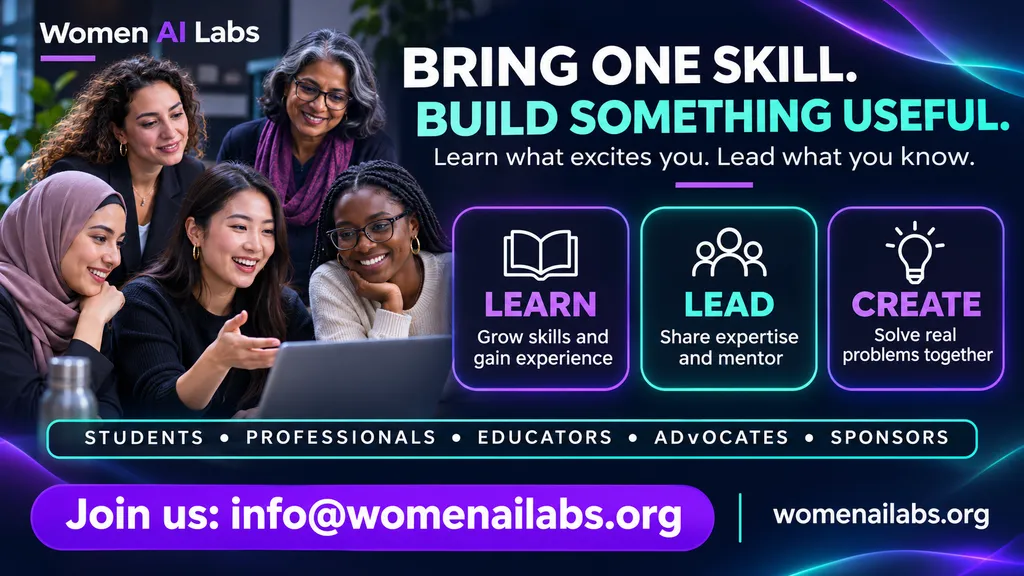
To express interest in contributing, mentoring, or exploring a partnership, contact info@womenailabs.org.
AI Equity Challenge/Harms · AI Careers · News · Innovation Labs · LinkedIn · Women AI Labs


Leave a Reply